
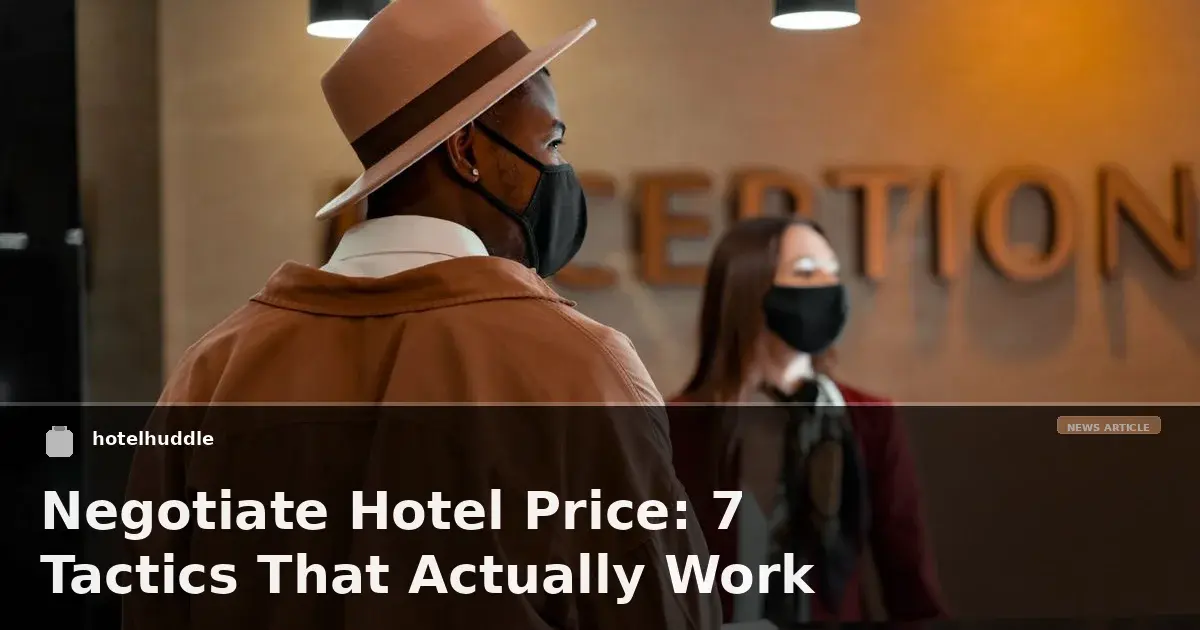
Walking up to the front desk and asking for a better rate can feel awkward — but it does not have to be. The truth is, hotels expect guests to negotiate hotel price. They build flexibility into their rates and are often more willing to drop the nightly charge than leave a room empty. Whether you are booking a last-minute stay, extending your trip, or just want to pay less than the published rate, these seven tactics can help you secure the best hotel deals without burning bridges.
1. Call the Hotel Directly Instead of Booking Online
Online travel agencies (OTAs) take a commission — often 15% to 25% — which hotels would rather keep. When you call the front desk directly and ask to book, the staff knows they will earn more from your stay even if they lower the rate slightly. Mention that you saw a price online and ask if they can beat it. Many properties have unpublished direct-booking discounts that never appear on third-party sites.
2. Use the "Walk-In" Advantage
If you are already in the area, walking into the lobby later in the evening can be a surprisingly effective way to negotiate hotel room rates. Hotels hate empty rooms because they generate zero revenue. By 9 p.m. or later, the front desk has a clear picture of their occupancy. Approach politely, ask if they have availability, and name a price that is roughly 30-40% below their standard rate. You would be surprised how often this works — especially at independently owned properties where the decision-maker is right at the desk.
3. Leverage the Length-of-Stay Discount
Hotels value extended stays because they reduce housekeeping costs and guarantee revenue across multiple nights. If you are staying three nights or more, ask for a multi-night discount. Frame it as: "I would like to stay four nights — can you offer a better nightly rate for a longer booking?" Many properties have unpublished extended-stay rates. Combine this tactic with a hotel price comparison tool to know the true market rate before you start negotiating.
4. Mention a Competing Property by Name
Nothing motivates a hotel to lower rates quite like the fear of losing a guest to a competitor. Before you negotiate, run a quick hotel price comparison search and identify two or three comparable hotels in the same neighborhood. When you speak with the front desk, reference a specific property and its rate: "The Marriott two blocks away is offering $129 tonight. Can you match or beat that?" Specificity signals that you have done your homework and are ready to walk.
5. Ask About Unadvertised Discounts and Packages
Hotels often have discount codes and packages that are not listed publicly. These can include AAA/CAA member rates, senior discounts, corporate rates (even if you are just attending a local event), government employee rates, and loyalty member pricing. Simply asking "Do you have any current promotions or discounts I might qualify for?" can uncover hotel booking savings that shave 10-20% off the bill. If you belong to any membership organization — Costco, AARP, a university alumni association — mention it.
6. Negotiate Extras, Not Just the Room Rate
Sometimes the front desk cannot move on the base rate but can sweeten the deal in other ways. Free parking (worth $30-50 per night in major cities), complimentary breakfast, waived resort fees, late checkout, or a room upgrade are real financial wins. When the desk says the rate is fixed, pivot to: "I understand — could you include parking and breakfast instead?" These perks often come from a separate budget and are easier for staff to approve.
7. Time Your Booking for Maximum Leverage
Timing is everything in hotel price negotiation. The best windows for negotiating are: late evening same-day (hotels know their occupancy), midweek for weekend stays (demand is lower on Tuesday/Wednesday), and 24-48 hours before check-in when cancellations create last-minute availability. Avoid negotiating during major events, conventions, or peak tourist season when demand gives hotels the upper hand. If you want a more structured approach to naming your price, learn how hotel bidding platforms let you submit your ideal rate and let hotels compete for your booking.
Putting It All Together
Effective hotel rate negotiation is not about being aggressive — it is about being informed and polite. Do your research, know the market rate, and approach the conversation as a collaboration rather than a confrontation. The front desk staff wants to fill rooms, and you want to save money. That shared interest makes negotiation a natural fit.
Start your search today by comparing hotel prices to understand what rates are actually available, then put these tactics to work on your next booking. A little confidence at the front desk — or through an online hotel booking request — can mean hundreds of dollars back in your pocket.