
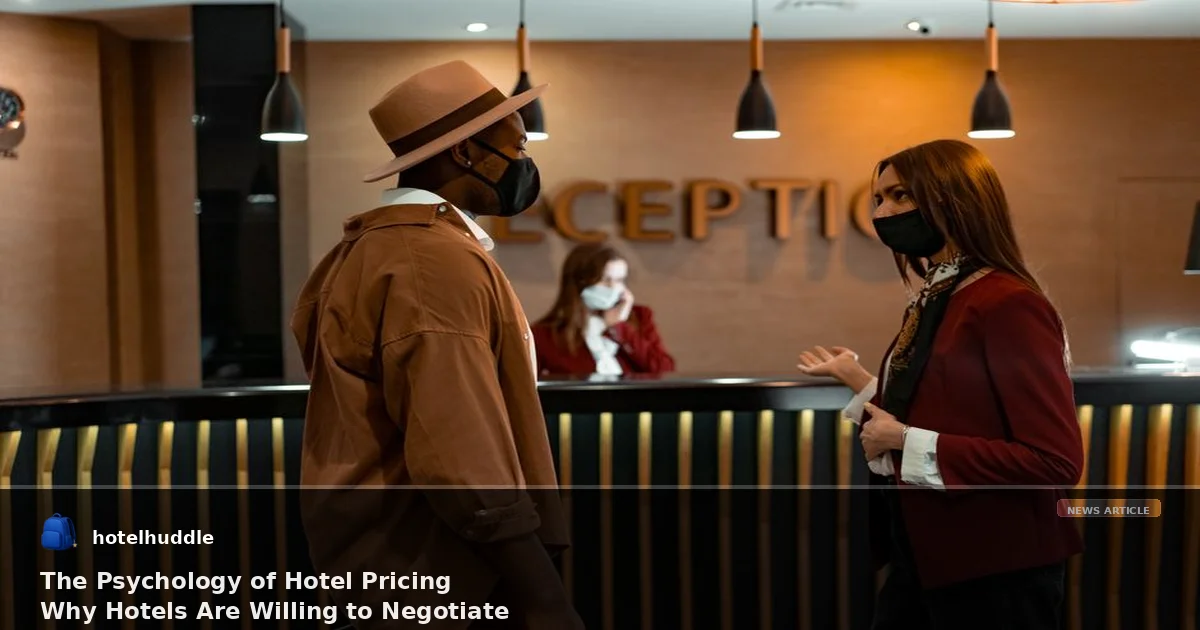
Every empty hotel room tells the same story: a property carrying fixed costs, selling a product that expires at checkout, with exactly one shot to sell tonight's stay before it vanishes forever. That simple reality is why hotel price negotiation works far more often than most travelers assume. Hotels are not merely open to negotiating — the economics of the entire industry are built around it.
The Economics of an Empty Room
Hotels sell the most perishable product in retail. A room that goes unsold tonight can never be sold again; unlike a car on a lot or a pair of shoes on a shelf, unsold inventory simply disappears at checkout time. This is the foundation of yield management — the practice of adjusting room rates in real time to capture as much revenue as possible from every single night.
Meanwhile, a hotel's biggest expenses — the mortgage or lease, utilities, housekeeping, front desk, and insurance — remain the same whether the property is full or half empty. Once those fixed costs are covered, nearly every additional dollar a guest pays flows almost directly to the bottom line. In other words, a discounted room is almost always better than an empty one.
Why Hotels Are Primed to Say Yes
Several psychological and financial forces push hotels toward accepting offers below their advertised rate:
- Loss aversion. Managers feel the sting of an unsold room far more sharply than the satisfaction of a full-price one. Locking in revenue now beats gambling on a last-minute booking that may never arrive.
- Commission pressure. Reservations made through online travel agencies can cost a property 15% to 25% in fees. A direct offer — even one slightly below the OTA rate — often leaves more money in the hotel's pocket.
- Competition anxiety. In most destinations, a traveler comparing prices finds dozens of near-identical options. Hotels know a slightly lower price is frequently the deciding factor.
- The forecast gap. When occupancy is projected to fall short, revenue managers are actively instructed to fill rooms at whatever rate the market will bear.
What This Means for Your Next Booking
The psychology behind hotel price negotiation puts real leverage in the traveler's hands — if you choose to use it. Rather than accepting the first rate a search engine displays, you can compare hotel prices across properties, then make a reasonable, direct offer. Many travelers are surprised by how quickly a reservations desk says yes to a fair proposal.
The key is understanding that the published rate is a starting point, not a final answer. Hotels publish high "rack rates" partly to anchor expectations, then discount through channels, loyalty programs, and negotiation. When you come to the table with a realistic number, you are simply participating in a system that already exists.
How to Turn Hotel Price Negotiation Into Real Savings
- Compare first. Use a tool to compare hotel prices so you know the genuine going rate before you ask for anything.
- Make a realistic offer. Aim 10% to 20% below the advertised rate. Lowball offers get ignored; reasonable ones get accepted.
- Name your price. State a specific figure for your stay. Hotels respond better to a concrete, confident number than to a vague request for a "discount."
- Mention your flexibility. If you can shift dates or stay midweek, say so — hotels discount the nights they struggle hardest to fill.
- Be ready to book now. An offer attached to an immediate booking is worth far more than one that might happen later.
Turn the Psychology to Your Advantage
Every traveler has the same opportunity, but remarkably few use it. Armed with an understanding of how hotel price negotiation truly works — perishable inventory, fixed costs, and a manager's fear of an empty room — you can stop paying the advertised rate and start locking in the best hotel deals on nearly every trip.
The service is completely free for travelers: there is no fee to search, compare, or make an offer. Simply negotiate hotel price on your next booking and see how often the answer is yes.